Advisory Services · Method
Current state vs.
future state analysis.
Current state versus future state analysis (also called gap analysis) compares how a process runs today with how it should run, then quantifies the difference. That difference, the delta, is the business case. In one representative engagement it took a global device lifecycle process from 27 steps to 11, from 4 weeks to 2, and from $427 to $220 per device.
Last updated October 9, 2026
A worked example
A Fortune 500 manufacturer moved every end-user device through a 27-step path: ordered, shipped to a third-party staging facility, imaged and configured by hand, then forwarded to the employee. We mapped it end to end and asked of every step whether it needed a person or a system. Most did not need a person. The third-party staging vendor came out of the path entirely.
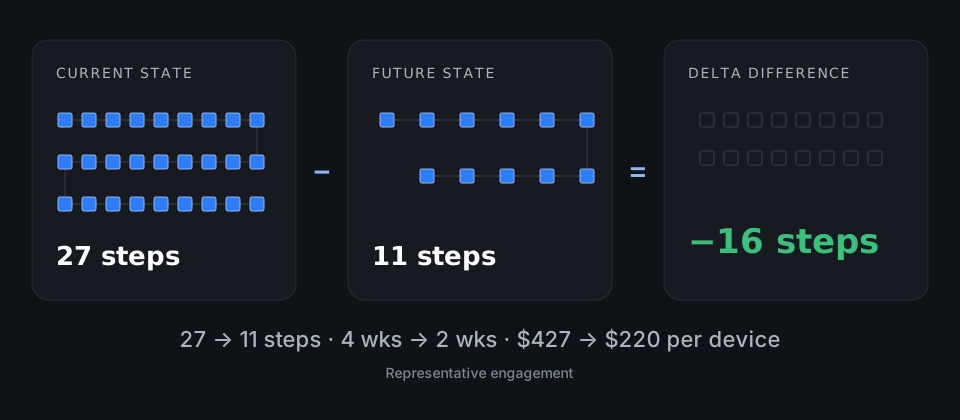
| Measure | Current state | Future state | Delta |
|---|---|---|---|
| Process steps | 27 | 11 | 16 fewer (about 59%) |
| Order to delivery | 4 weeks | 2 weeks | 2 weeks faster (50%) |
| Cost per device | $427 | $220 | $207 lower (about 48%) |
| Security compliance across the fleet | 76% | 98% | 22 points higher |
| First-year refresh cost absorbed | $2M | Removed | $2M avoided |
The second-order effects were larger than the first. Devices deployed under modern management could be supported remotely, which removed a cost the business had absorbed after its previous refresh, and policy now travelled with the device instead of depending on someone applying it at a staging bench. The client is unnamed.
How the delta difference is calculated
The delta difference is built from measured inputs, not estimates, and is expressed in the units a finance leader reads:
- Efficiency gained: the change in throughput or cycle time for the same work.
- Steps removed: handoffs, approvals and manual stages the future state eliminates.
- Hours returned per employee: time given back to people who were feeding the process.
- Troubleshooting and support avoided: tickets, rework and downtime the old process generated.
Each one converts to dollars using your own rates and volumes. The annual delta is the current-state annual cost minus the future-state annual cost. Dividing the one-time cost of making the change by the annual delta gives the payback period.
Arithmetic, not a benchmark. Annual delta = current-state annual cost − future-state annual cost. Payback = one-time project cost ÷ annual delta. Every input should come from your own data.
How to run the analysis
- Define the process boundary: trigger, outcome, people, systems and handoffs.
- Baseline the current state with measured hours, cost, volume and defects, from the real workflow rather than the documented one.
- Define the future state from what the business needs, not as a faster copy of today.
- Quantify the delta measure by measure, and show the assumptions.
- Decide: a large delta justifies the project; a small one is a reason not to spend.
Common mistakes
- Estimating the current state instead of measuring it, which makes the delta impossible to defend.
- Defining the future state as the current process on new software, which reproduces the problem.
- Counting only first-order savings and missing the support, compliance and risk effects that follow.
- Choosing the platform before the delta is known.
Keep reading
 Common questions
Frequently asked questions
What is current state vs. future state analysis?
A comparison of how a process runs today with how it should run, followed by quantifying the difference. It is also called gap analysis, and the quantified gap is the business case for change.
How is the delta difference calculated?
From measured inputs: efficiency gained, steps removed, hours returned per employee, and troubleshooting and support avoided, converted to dollars with your own rates and volumes. Annual delta is current-state annual cost minus future-state annual cost.
What data do you need to establish the current state?
Measured hours, cost, volume and defects for the real workflow, from the people who run it and the systems that record it, not the documented version of the process.
What is a good example?
A global device lifecycle process went from 27 steps to 11, from 4 weeks to 2, and from $427 to $220 per device, with security compliance rising from 76% to 98%.
Get the delta for your own process
Bring us the process capping your growth and we will establish the current state, define the future state and quantify the gap. The first conversation costs nothing.